
Fast Free ROM Downloads With Better Emulator Compatibility
Some ROM games run instantly. Others crash during startup, freeze on black screens, fail to detect BIOS files, or suddenly stop working after installation. Most of these problems are not caused by the game itself, but by emulator compatibility issues, damaged archives, unsupported file formats, unstable settings, or missing firmware files. This page explains why certain ROM downloads work smoothly while others fail completely, what experienced emulator users usually check first, and how to avoid the setup mistakes that break gameplay on PC, Android, and handheld devices.
What Is Romslab and How ROM Libraries Actually Work
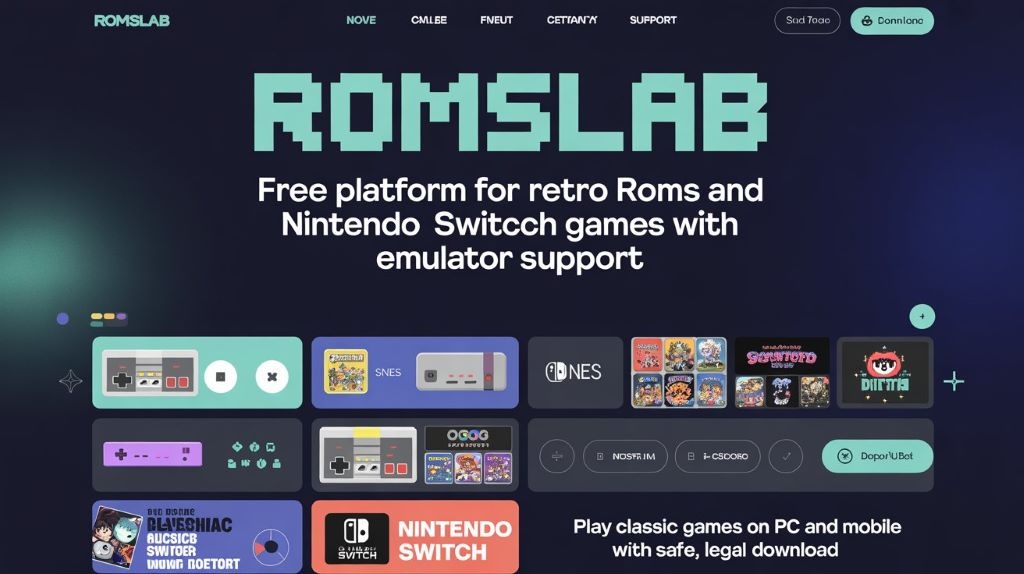
Romslab-style ROM libraries are platforms built for downloading classic console and handheld game files that can run through emulators on PC, Android devices, gaming handhelds, and other modern hardware. Instead of using physical cartridges or discs, users load digital ROM files directly through emulator software designed to recreate the original gaming system.
While the process sounds simple, ROM compatibility depends on far more than just downloading a game file. Emulator support, BIOS requirements, archive formats, shader behavior, firmware compatibility, and device performance all affect whether a ROM launches correctly or fails with black screens, crashes, or startup errors. That is why the same game may run perfectly on one device but completely fail on another using a different emulator setup.
Why Many Users Prefer Modern ROM Libraries
Modern ROM libraries are no longer just simple download directories. Most platforms now focus on faster organization, emulator compatibility, archive preservation, and easier cross-device access for retro gaming communities.
While features vary between platforms, most users look for a few core advantages before downloading ROM files.
- Multi-console support: Access ROM collections for PlayStation, PSP, Nintendo, Sega, arcade systems, and handheld consoles.
- Compressed archive delivery: ZIP, CHD, and 7Z formats help reduce storage usage and download size.
- Emulator compatibility guidance: Many ROM libraries organize files based on emulator support and platform stability.
- Region availability: Users can often choose between USA, Europe, Japan, or translated ROM versions.
- Mobile-friendly access: Many users download ROM files directly to Android handhelds or smartphones.
- Preservation-focused archives: Some collections prioritize verified ROM dumps and long-term file integrity.
For experienced emulator users, file quality and compatibility consistency matter far more than simply having a large game catalog.
How to Download and Set Up ROM Files Step by Step
Downloading a ROM is usually quick, but getting the game to run correctly often depends on emulator compatibility, BIOS setup, archive extraction, and stable device settings. Most startup errors happen because one of these steps is skipped or configured incorrectly.
- Choose the right emulator: Make sure the emulator fully supports the console and ROM format you want to run.
- Download a compatible ROM file: Common formats include ISO, CHD, ZIP, 7Z, and BIN/CUE depending on the platform.
- Extract compressed archives if needed: Some emulators can load ZIP files directly, while others require manual extraction first.
- Install BIOS or firmware files: Systems like PlayStation, Sega CD, and arcade emulators often need additional BIOS support before games can boot.
- Organize ROM folders properly: Clean storage paths help emulators detect games, save files, and updates more reliably.
- Configure Vulkan or OpenGL settings: Stable rendering backends can dramatically reduce crashes, black screens, and shader problems.
- Test performance before long gameplay sessions: Verify save states, controller mapping, audio stability, and frame performance before playing for extended periods.
Experienced emulator users usually spend more time checking BIOS compatibility, archive integrity, and rendering stability than simply downloading ROM files as quickly as possible.
Why Some ROM Files Run Perfectly While Others Refuse to Load
One of the biggest misconceptions in emulation is assuming every ROM should work immediately after downloading. In reality, ROM performance depends on emulator compatibility, archive integrity, BIOS support, rendering stability, and device performance working together correctly.
- Black screens: Often linked to missing BIOS files, unstable Vulkan settings, or incompatible rendering backends.
- Random crashes: Usually caused by corrupted archives, unsupported ROM revisions, or emulator instability.
- Failed save detection: Common when storage permissions or emulator save paths are configured incorrectly.
- Slow startup times: Sometimes triggered by shader compilation or heavily compressed archive formats.
- Games freezing after launch: Frequently connected to firmware issues, memory limitations, or incompatible emulator builds.
A PlayStation 2 ROM that runs smoothly through PCSX2 on desktop hardware may still struggle badly on Android devices using AetherSX2 because of shader behavior, GPU driver stability, or thermal throttling.
Why BIOS and Firmware Files Matter So Much
Many console emulators rely on BIOS and firmware files before games can boot correctly. These files replicate important parts of the original console startup process and hardware behavior.
Systems like PlayStation, Sega CD, Neo Geo, and several arcade platforms depend heavily on proper BIOS detection during startup.
- Incorrect BIOS names: Prevent emulators from detecting firmware correctly.
- Wrong regional BIOS versions: Can trigger compatibility problems or failed launches.
- Outdated firmware files: Often cause black screens, loading loops, or startup crashes.
- Incorrect folder placement: Stops the emulator from reading BIOS data entirely.
Experienced emulator users usually verify BIOS compatibility before assuming a ROM file itself is damaged.
Common ROM Formats and Why They Matter
ROM files exist in multiple formats depending on the original console hardware and how the game data was preserved or compressed.
- ISO: Common for disc-based systems like PlayStation 2 and PSP.
- CHD: Popular compressed format designed for efficient preservation.
- ZIP: Standard archive supported by many retro emulators.
- 7Z: Higher compression ratio but limited compatibility in some emulators.
- BIN/CUE: Raw disc image structure frequently used for older PlayStation and Sega CD titles.
Many users run into problems because they assume every emulator supports compressed archives automatically. Some applications can load ZIP files directly, while others require full extraction before gameplay can begin.
CHD files are becoming increasingly popular because they reduce storage usage significantly without heavily impacting compatibility. However, older emulator builds may still struggle with them.
Using the wrong file format is one of the easiest ways to trigger startup failures even when the ROM itself is perfectly preserved.
How to Verify a ROM Download Before Opening It
Experienced emulator users rarely trust a ROM file immediately after downloading it. Most verify the archive first before assuming the game is ready to run.
The most reliable method is checksum validation through CRC32, MD5, or SHA hash comparisons. These values help confirm whether the downloaded ROM matches the original preserved game dump.
If the checksum does not match trusted preservation databases, the archive may be incomplete, corrupted, modified, or damaged during transfer.
Before launching a ROM, users should also confirm:
- The emulator version supports the game properly
- The correct BIOS files are installed
- The archive extracted successfully
- The ROM region matches emulator compatibility
- The storage device has enough free space
- No important files were blocked during extraction
These small checks prevent a surprising number of crashes, corrupted saves, and failed game launches.
Safe ROM Download Habits Most People Ignore
A large number of ROM problems actually begin long before the emulator opens. Unsafe downloads, damaged mirrors, modified archives, and fake installers are still extremely common across ROM-sharing platforms.
Many inexperienced users accidentally download executable files disguised as ROM managers, emulator boosters, or setup tools. In reality, legitimate ROM archives rarely require installers.
Safer ROM handling usually involves a few simple habits:
- Avoid executable installers whenever possible
- Verify archive size before extraction
- Keep emulator builds updated
- Use trusted emulator sources
- Scan suspicious compressed files
- Avoid fake “FPS boost” utilities
- Check checksum values when available
In many situations, users blame the emulator when the real issue started with a corrupted or modified ROM archive during download.
Why Some Games Work on PC but Fail on Android
A ROM that works perfectly on desktop hardware may still perform poorly on Android because mobile devices introduce completely different hardware and software limitations.
- Thermal throttling: Phones reduce performance automatically when device temperatures rise.
- Shader cache instability: Can cause freezing, frame drops, or severe stuttering.
- RAM limitations: Demanding emulators often struggle on low-memory devices.
- Storage permission issues: Some emulators fail to access ROM folders correctly on Android.
- GPU driver inconsistencies: Vulkan and OpenGL behavior varies heavily between devices.
Even flagship phones can struggle with advanced PlayStation 2, Wii, GameCube, or Nintendo Switch emulation if rendering pipelines and shader compilation are unstable.
Best Emulators for Different Types of Console ROMs
Different consoles require different emulator strengths. Some platforms focus on speed, while others prioritize hardware accuracy and long-term compatibility.
- RetroArch: Flexible multi-system frontend with extensive core support.
- DuckStation: Popular for accurate and stable PlayStation 1 emulation.
- PCSX2: One of the most reliable PlayStation 2 emulators on desktop.
- PPSSPP: Lightweight PSP emulator with strong Android support.
- Dolphin: Widely used for GameCube and Wii emulation.
- AetherSX2: Android-focused PlayStation 2 emulator.
There is no universal “best emulator” for every ROM. Compatibility, hardware requirements, rendering behavior, and update frequency all matter when choosing the right emulator setup.
Romslab vs Other ROM Platforms
| Feature | Romslab-Style Libraries | Basic ROM Directories | Preservation-Focused Archives |
|---|---|---|---|
| Console Variety | High | Medium | High |
| File Organization | Structured | Limited | Advanced |
| Compressed Formats | ZIP / CHD / 7Z | Mostly ZIP | CHD Focused |
| Emulator Guidance | Moderate | Low | Advanced |
| Mobile Compatibility | Strong | Inconsistent | Moderate |
| Archive Verification | Varies | Limited | Usually Verified |
Experienced users usually prioritize verified ROM integrity and emulator compatibility over raw download quantity.
Romslab Alternatives and Similar ROM Libraries
Many users compare multiple ROM platforms before downloading games because file quality, emulator compatibility, archive stability, and download reliability can vary more than expected. Some websites focus heavily on retro cartridge preservation, while others specialize in PlayStation, Nintendo, PSP, arcade, or handheld game collections.
- Retro gaming archives: Usually focused on classic systems like NES, SNES, Sega Genesis, Game Boy, and older cartridge-based consoles.
- PlayStation ROM platforms: Commonly include PS1, PS2, PSP, and BIOS-compatible disc-based game collections designed for emulators such as PCSX2 and PPSSPP.
- Nintendo-focused libraries: Often centered around Game Boy, Nintendo DS, 3DS, GameCube, Wii, and Switch-era emulation support.
- Arcade ROM collections: Typically built for MAME, Neo Geo, and preservation-focused arcade emulation with verified ROM sets.
- Android handheld ROM sources: Popular among users running portable emulators on devices designed for retro gaming and mobile emulation.
Experienced emulator users usually care less about branding and more about stable archives, verified ROM integrity, clean extraction behavior, and long-term emulator compatibility.
That is why many emulator communities recommend checking checksum validation, BIOS support, and archive consistency before assuming a ROM collection is fully reliable.
Frequently Asked Questions
Why does a ROM download correctly but still refuse to start?
In most cases, the issue is caused by emulator compatibility problems, missing BIOS files, unsupported archive formats, or damaged extraction data rather than the ROM itself.
Why does the same ROM run smoothly on PC but lag on Android?
Desktop systems usually provide stronger CPUs, more stable graphics drivers, and better thermal performance. Android devices often struggle with shader compilation and memory limitations.
Do all emulators support ZIP and 7Z archives?
No. Some emulators can load compressed archives directly, while others require full extraction before gameplay begins.
What usually causes black screens during startup?
Black screens are commonly linked to missing firmware, incompatible rendering backends, unstable emulator builds, or incorrect BIOS configuration.
How can users check whether a ROM file is corrupted?
Checksum validation using CRC32, MD5, or SHA values is one of the most reliable ways to verify ROM integrity.
Is Romslab safe to use?
Safety depends on archive integrity, download behavior, file verification, and whether users avoid suspicious installers or modified files.
What is the best format for ROM downloads?
There is no universal best format. ISO works well for disc-based games, CHD reduces storage usage, ZIP is widely supported for retro systems, and BIN/CUE remains common for older disc images.
Final Thoughts
Most ROM problems are not caused by the game file alone. Emulator compatibility, BIOS setup, archive integrity, rendering stability, and device limitations all affect whether a ROM launches smoothly or fails with crashes, black screens, corrupted saves, or performance issues. For the best experience, users should focus on verified ROM quality, stable emulator builds, correct firmware files, and proper setup instead of relying only on fast downloads.